COMMUNITY SERVICE 1
Learning to Listen Before I Learned to Build
Four years of long-term volunteering at a senior welfare center — and the slow realization that the most useful thing I could offer wasn't a task completed, but attention paid.
Yongin Senior Welfare Center · 2023–Present

WHAT THE SCHEDULE SAID VS. WHAT I ACTUALLY DID
The task list was never the point
ON THE SCHEDULE
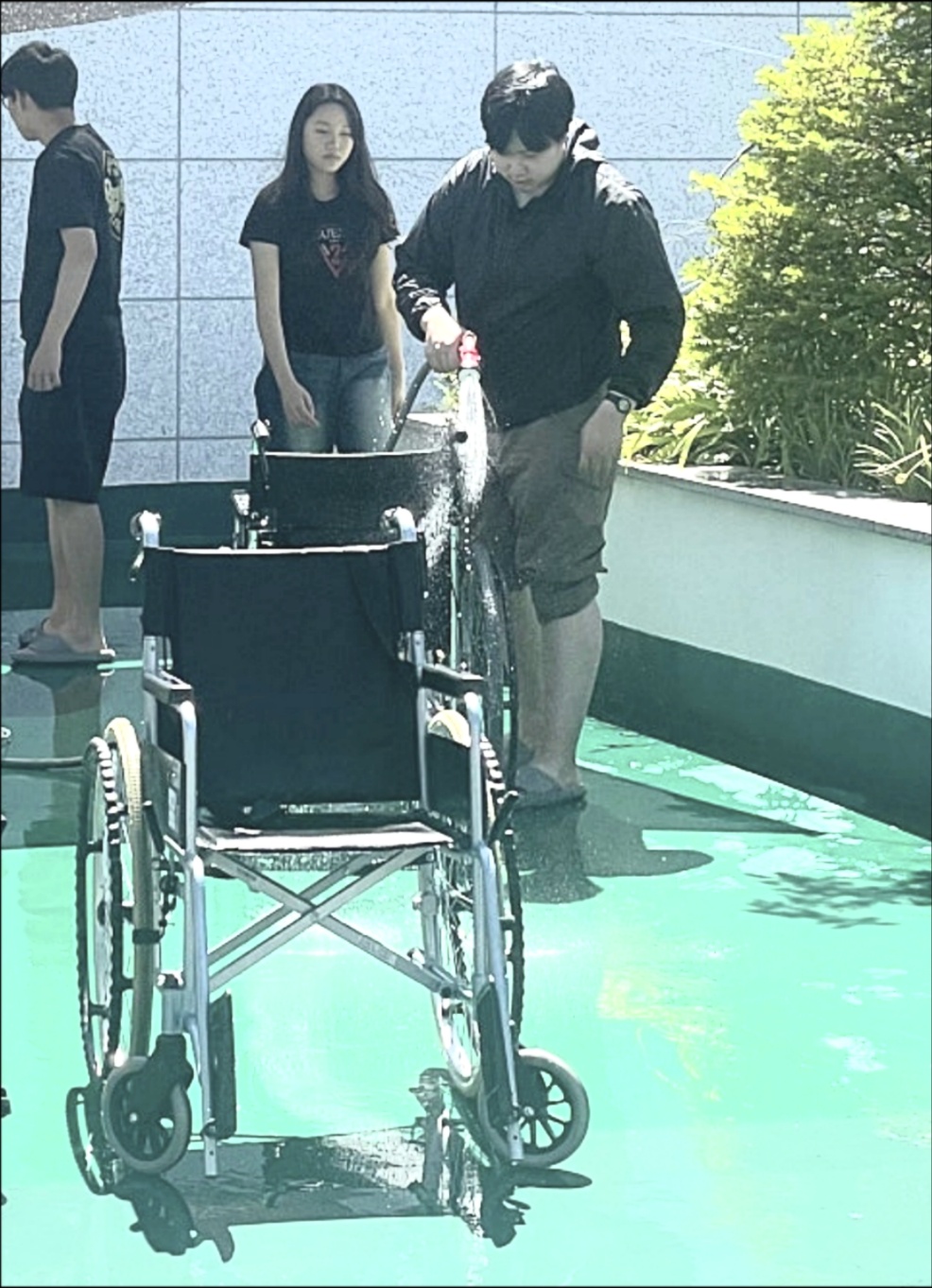
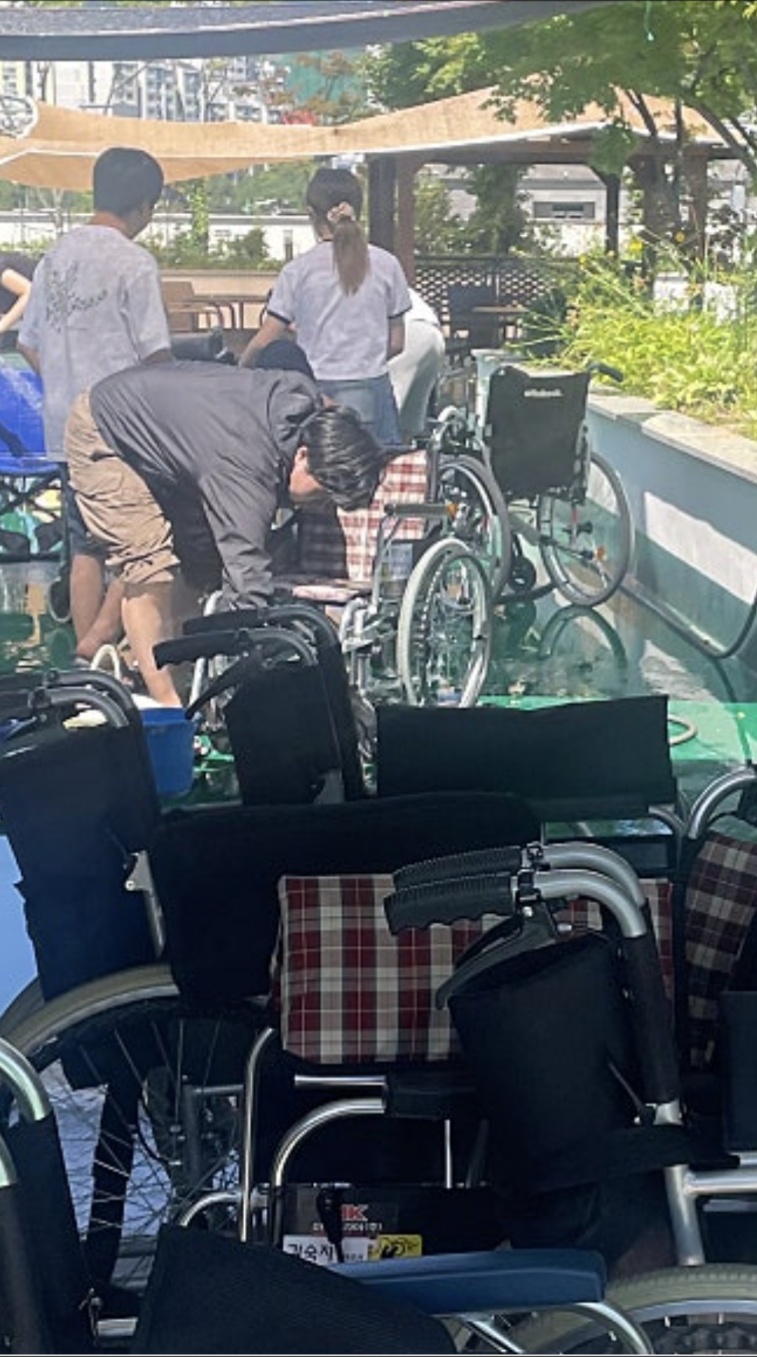
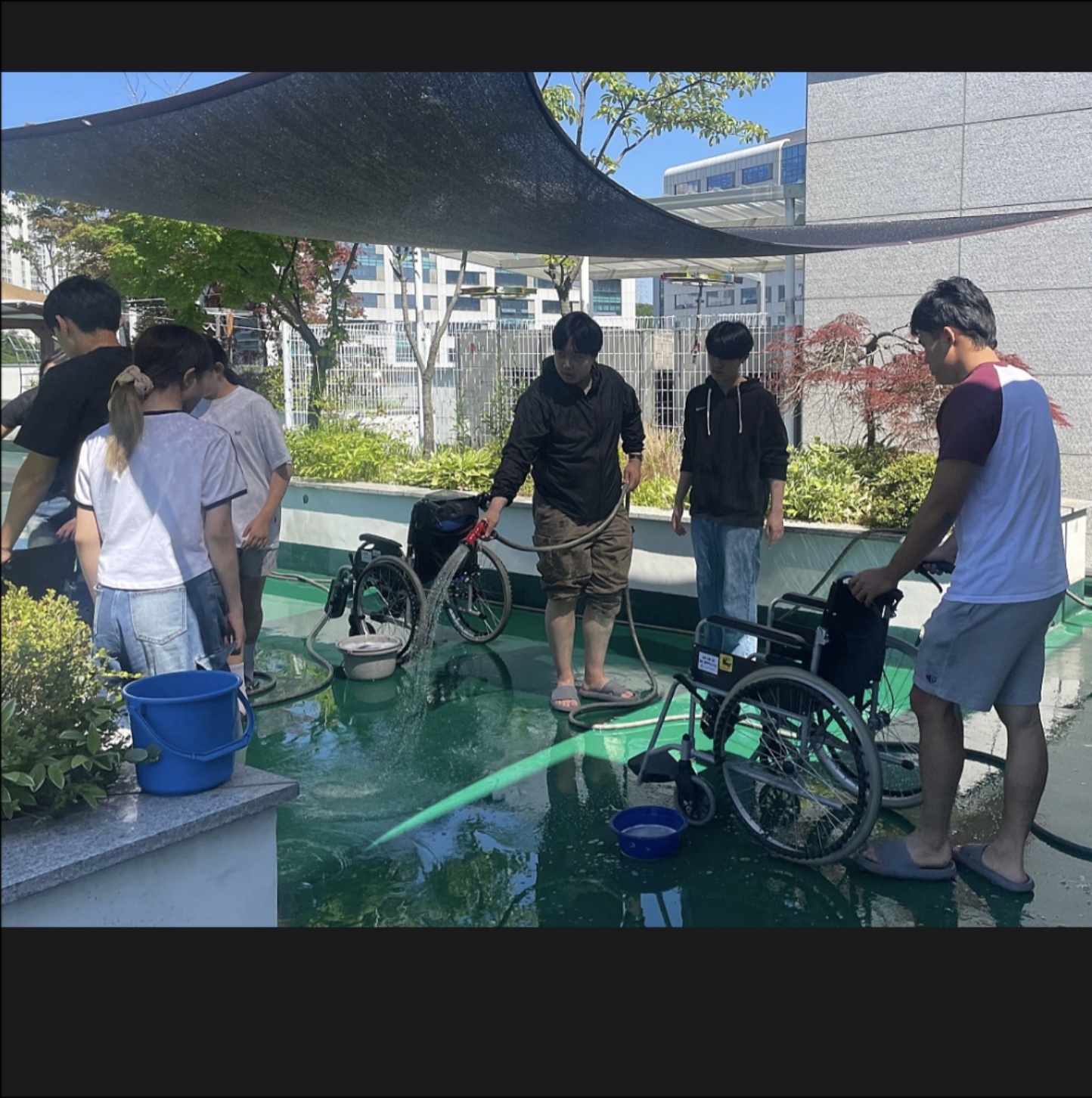
Facility cleaning. Wheelchair and bed sanitation. The kind of volunteer work that shows up cleanly on a sign-in sheet — a set number of hours, a set list of chores, a supervisor's signature at the end of the shift.
WHAT I KEPT COMING BACK FOR
Sitting beside residents who weren't feeling well. Letting a conversation run long because it clearly mattered to the person telling it. Holding a hand when there wasn't anything useful left to say. None of that was ever written down anywhere — and it's the only part I still think about.
A STANDING APPOINTMENT, NOT A ONE-TIME EVENT
Bringing the violin

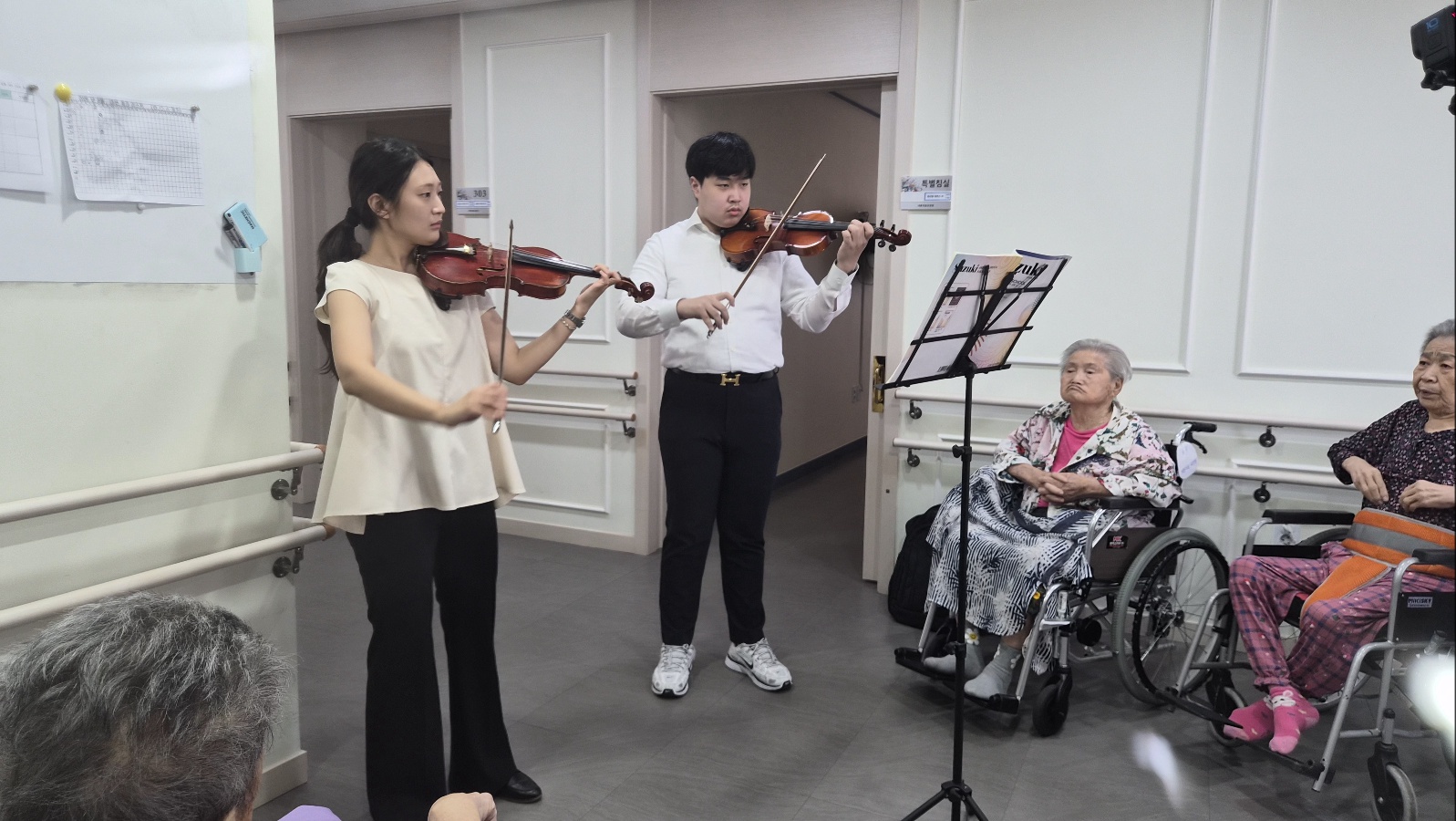
I play second violin in the MCA Orchestra, where the goal is usually precision — hitting the right note, in the right section, at the right time. At the welfare center, I found a different use for the same instrument. I started performing there regularly, not as an occasional favor but as something residents could actually plan their week around.
The difference mattered more than I expected. A one-time recital is a nice gesture. A recurring one becomes something people wait for.
What stayed with me most was watching their faces while I played. I could see it clearly — the happiness in the room was real, not polite. That was never something I set out to measure, but it was impossible to miss, and it changed how I played. Knowing how much it meant to them gave me more energy to keep going, even on the songs I'd already played a dozen times before. I wasn't performing for an audience anymore; I was playing for people I recognized, and that made every note feel like it mattered a little more.
ONE PROJECT, RECONSIDERED FROM THE GROUND UP
From an album of photos to an archive of a life
2022–
2024
For the first two years, my main project was a photo album. I collected pictures of residents, had them printed, and put together a small book for each person to keep. It was a genuinely appreciated gift — but looking back, it only ever captured what someone looked like at a given moment. It said nothing about who they actually were, what they had lived through, or what they wanted remembered.
2024–
Present
Around the time I started working with AI in my other projects, I realized I'd been using the wrong tool for the wrong problem. So I changed the process entirely. Instead of just gathering photographs, I began sitting down with each resident and asking them to actually tell me their story — where they grew up, the people who shaped them, the memories they returned to most often. I used AI not to invent anything, but to help organize what they told me into something closer to a short, written life story — their own words, arranged alongside their photos, into something that reads like a small book rather than a stack of pictures.


WHAT STAYED THE SAME WHILE THE METHOD CHANGED
What I actually took from this
I went into this expecting the interesting part of the project to be the AI — the technical piece, the thing I could point to as evidence of skill. It wasn't. The AI only worked because of something that happened before I ever opened my laptop: sitting across from someone long enough, and carefully enough, that their story came through accurately instead of getting flattened into a summary. Skipping that step would have produced a nicer-looking book and a completely hollow one.
That ordering — understand first, build second — turned out to be the thing I kept relearning every time I came back to the center, and it's the instinct I now catch myself applying everywhere else. When I was mapping out the interface for Onshimgil, an app meant to guide elderly residents to safe shelters during extreme weather, I didn't start with the sensors or the routing logic. I started with the same question I'd been asking at the welfare center for two years: what does this specific person, with these specific limits, actually need from me right now — and only after that, what should I build.
I want to study electrical engineering because I'm genuinely drawn to the technical side of it — circuits, sensors, the physical systems that make computation possible. But four years of sitting with people who mostly just wanted to be heard taught me something I don't think I would have learned in a lab: that the systems worth building are the ones designed around a person who was actually listened to first. That's not a lesson I expected to take from a senior center. It's the one I've held onto the longest.

Volunteering
Through volunteering, we foster intergenerational communication and share warmth with the local community.